SCRAP Reading Group, Week 32: Water, Agriculture, & Society

Last Thursday, we had our first meet-up of the new year. We had a good time catching up with each other, talking about future field research plans, and having a lot of laughs. Lorraine selected a new article for us to discuss, focused on the deep history of water management, agriculture, and society in the Calakmul Biosphere Reserve. Summary and associated discussion questions are below.

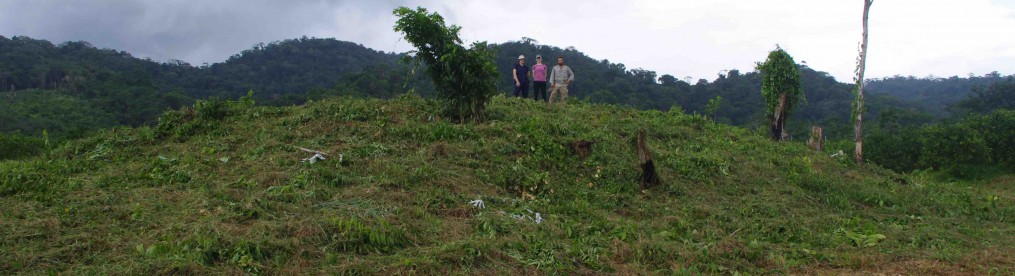
From https://www.ltandc.org/restoring-and-protecting-calakmul-biosphere-reserve/


Šprajca, Ivan, Dunning, Nicholas P., Štajdohara, Jasmina, Gómez, Quintin Hernández, López,
Chato Israel Marsetič, Aleš, Ball, Joseph W. G ngora, Sara Dzul, Olgu n, Octavio Q. Esparza,
Flores, Atasta Esquivel and Kokalja, Žiga. “Ancient Maya water management, agriculture, and
society in the area of Chactún, Campeche, Mexico.” Journal of Anthropological Archaeology.
Volume 61, March 2021, p. 1 – 21.

Summary:
In this article, the authors discuss the results of the Chactún Regional Project (CHRP). The CHPR
area is located in the Calakmul Biosphere Reserve, which is within the Elevated Interior Region
of the Maya Central Lowlands in the eastern part of the State of Campeche, Mexico. They direct
their focus on the three relatively newly discovered (2013 to 2014) and undisturbed urban centers
of Chactún, Tamchén, and Lagunita and to a lesser degree the surrounding spatial units. In their
evaluation of the area, they attempt to demonstrate the importance of using remote sensing
methods, such as their ALS (lidar) data obtained in 2016, in conjunction with field studies, to
validate their interpretations. The authors go into depth in the reconstruction of the area-specific
intensive agriculture and water management strategies and their coincidence with sociopolitical
and biosphere aspects not only within the study area, but also relationships with the Maya
worldview. Based on the earliest evidence of water sourcing and Pre-Mamom ceramics (~1000-
400 BCE), they surmised that Tamch n was one of the earliest Preclassic settlements in the
Central Lowlands and, as follows, in the CHRP area. This center fluoresced during the Middle
and Late Preclassic periods until Chactún and Lagunita seemingly overtook, thus perpetuating
the demise of Tamchén. Using demographic attributes, the authors put forth that it was most
likely during the Last Classic – probably around 750 CE – that the population reached a
maximum of ~ 15,000 in the CHRP area. These authors argue that it was the extensive
landscape modifications and environmental stressors, such as prolonged droughts of the 9th and
early 10th centuries of the Late Classic, that saw critical soil and wood depletion that in turn
contributed to sociopolitical and ideological instability. This ultimately resulted in the near
abandonment of the study area and led to the Classic Maya culture’s final demise in the Central
Lowlands.

Questions:
(1) How would you define the “final demise of Classic Maya culture” that is said to have spanned
from about CE 750 to 950 CE? Is your definition in line with the authors’ premise of what
occurred in the CHRP area? Would the concept of “transformative relocation” and/or “path
dependency” be more in keeping with what not only happened at the CHRP study area but
elsewhere in the Maya world(view)?

(2) How do the following water management systems fit with the relative locations of Tamchén,
Chactún, and Lagunita and their respective landscape modifications?
(a) top-down, autocratic system–>elite control
(b) top-down, collective system–>bureaucratic control
(c) bottom-up, autocratic system–>household control
(d) bottom-up, collective system–>local control
(e) all of the above
(d) none of the above

(3) Is it plausible that a major factor of the shift to Chactún and Lagunita could be attributed to
the collapse of the seasonal karst system at Tamchén (i.e. they simply could not meet the water
needs of the growing demographics)? Were the gods angry!?!

(4) Given the various assumptions, are the demographics feasible? How might there be more
concise parameters employed to mitigate errors?

(5) Do Chactún, Tamchén, and Lagunita, in fact, fit into what would be considered “urban
centers”?
SCRAP graduate students awarded SSHRC prizes

Congratulations to SCRAP team members Dave Blaine and Matt Longstaffe! They were awarded a Social Sciences and Humanities Research Council of Canada Masters Scholarship and Doctoral Fellowship, respectively, for their proposed research at the ancient town of Alabama in the Stann Creek District of Belize. Read on to learn a bit more about these two outstanding scholars.

Dave Blaine (M.A. Interdisciplinary Studies student, Athabasca University, Alberta, Canada) – a photographer and mapmaker by trade – is living his dream. Exploring, discovering… and digging! Dave’s current studies focus on the interdisciplinary subjects of New Media and Social Heritage. But his genuine interest is in how narratives and storytelling can communicate science to various audiences, specifically, the science of archaeology. Check out this recent write-up about Dave in AU’s The Hub.

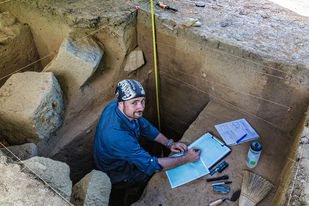
Dave drawing unit profiles.

Dave is developing a model for creating multimedia productions that tell stories of archaeology and archaeologists in innovative ways using digital technologies. The model requires him to tell the story of the Stann Creek Regional Archaeology Project (SCRAP) while actively participating in it. He’s had two field seasons in 2018 and 2019. During that time, he figured out what it looks like to juggle taking photos, shooting videos, recording interviews, and drawing maps with the day-to-day tasks of the project. 

And rest assured, the project is not just “the dig.” Along with the story of archaeological investigation, there’s also local politics, cuisine, and music. It’s a fulsome cultural experience. And it makes for a demanding production schedule.

Archaeology is a rich discipline for storytelling, and it provides a ready-made platform for exciting contemporary tales of travel, adventure, and (re)discovery as a field science. But archaeologists also reconstruct narratives of our pasts that can provide valuable and unexpected insights to address the challenges of our present and future. SCRAP’s research focuses on the ancient town site of Alabama as a possible example of a “boomtown” that developed in a sparsely populated area into a significant frontier center over a relatively short period. Communities around the world, past and present, have grown up under similar circumstances, and they rose to prominence for various reasons and then eventually faced sustainability challenges.

Matt Longstaffe (Ph.D. Archaeology candidate, University of Calgary, Alberta, Canada) is intrigued by the impact of economic activities on how such communities develop. His dissertation will explore household and group identities at Alabama and their relationships to community institutions. This includes elements of resource and labour distribution, skillsets, and specialist activities and how each contributed to the broader economy of the boomtown. In reconstructing and sharing this story, Matt will provide relevant insights, both locally and more broadly, into the social impacts of resource exploitation and development. This is particularly relevant in the Stann Creek District, where modern industrial development and associated settlement booms have occurred for over a century.

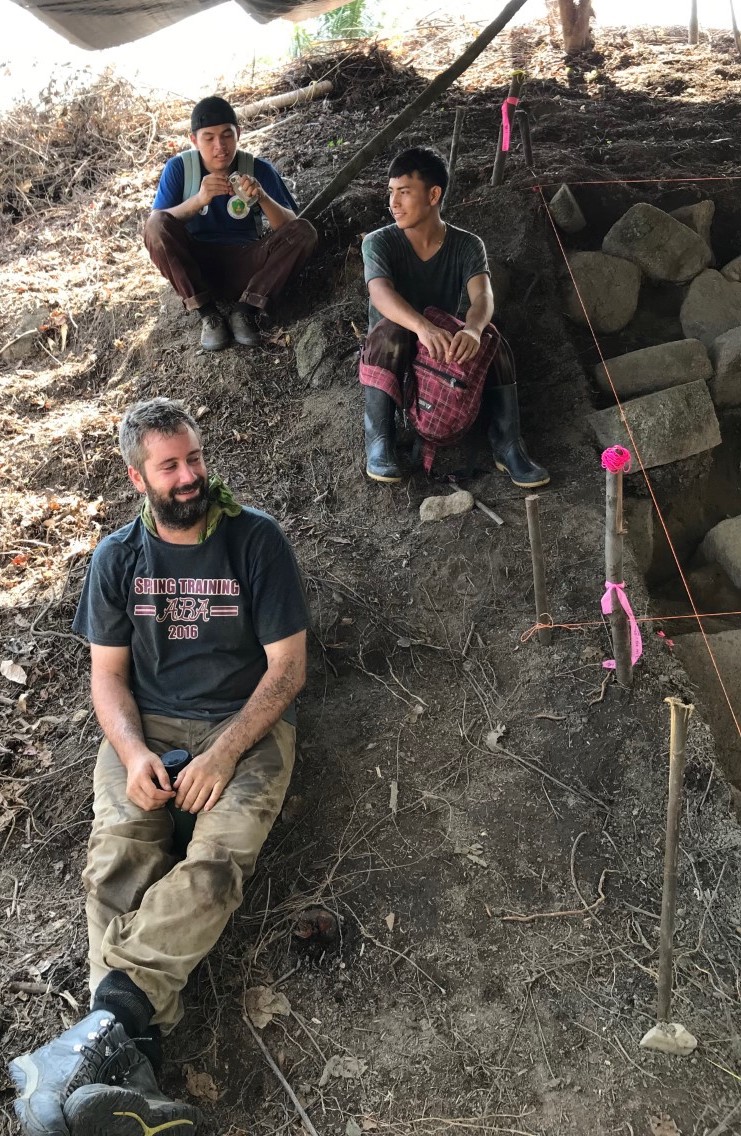
Matt hanging out with Higinio and Aaron.

Many people think of archaeology as a mind-numbing ordeal of brushing away dirt from bones and bits of pottery, or whatever it is that Indiana Jones does. Through storytelling, Matt and Dave hope to change those perspectives. Their stories will give our audiences insights into how archaeologists actually learn about past societies and gather evidence and use that information to understand how various peoples lived in the past. They will also relate what it is like to live, work, and collaborate with contemporary communities and build a culture of discovery in which these narratives are shared in meaningful ways.

By turning our gaze to earlier cultures and societies with similar experiences and sharing our own experiences in engaging and personal ways, SCRAP’s team is making significant contributions not just to archaeology as a discipline but to society as a whole. Exploring the past to inform a wiser future