SCRAP Reading Group, Week 35: The complexity of mound building.

Thank you to Matt, who selected our excellent article for discussion this week, focused on geoarchaeological perspectives on mound building. It is an excellent resource for our SCRAP team, which deals with complex earthen-core architecture at Alabama. See below for article reference, summary, and discussion questions.

Initiating excavations at Str. 10 of Alabama, with complex earthen stratigraphy both within the mound (access ramp and main platform) and outside in the North Plaza (e.g., red clay has been brought in from elsewhere).

Sherwood, Sarah C., and Tristram R. Kidder. “The DaVincis of dirt: Geoarchaeological perspectives on Native American mound building in the Mississippi River basin.” Journal of Anthropological Archaeology 30.1 (2011): 69-87.

Sherwood and Kidder challenge the assumption that earthen mounds are “simple” instead of arguing that mound construction was complex, requiring engineering know-how, substantial planning, considerable knowledge of soil properties, and the ability to mobilize labour. They advocate for studying the process of mound construction, arguing this approach can reveal as much, if not more, cultural information than functional perspectives that only consider mounds as an end-product. Put another way, the mounds themselves can be viewed as culturally significant artifacts that can tell us much about their builders’ society, economy, politics, and culture.

Using examples of monumental earthen-core mounds in the Mississippi River basin–Cahokia, Poverty Point, and Shiloh Mounds–the authors demonstrate the utility of employing multiple scales of evidence generated through geoarchaeological investigations to decipher the process of mound construction. These include regional soils and geomorphology, field observation of lithostratigraphic units, and micro-scale identification of mineralogy and soil development. They argue this data can be used to understand the organization of labour and the pace of construction, and evaluate past decisions related to the selection of materials and use of specific construction techniques. 

Possible Discussion Questions:

  1. What do you think of the concept of mounds as artifacts? Do you agree with the authors that by studying the process of mound construction, we can learn as much about society, economy, politics, and culture as we do from other forms of evidence (e.g., artifacts, settlement patterns, land use)?  
  2. The authors provide compelling evidence to challenge the assumption that “mounds are composed of the cumulative deposition of earthen material (typically local unconsolidated soil), accomplished by piling up consecutive ‘‘basket loads.’’ Should we discard this assumption in our analyses, or does it still have validity in certain contexts? Either way, do we need to change our language when we talk about core/fill contexts? Do we have sufficient evidence to distinguish between “loaded,” “homogenous,” or “zoned” fills? 
  3. The authors suggest the only significant difference between constructing smaller mounds and monumental mounds was the degree of labour investment. Is this a fair assumption? 
  4. The examples presented in this article have clearly distinguishable stratigraphy and deposits related to building materials and techniques. For example, sod and soil blocks, zoned fill, and veneers, are pretty obvious. Should we be looking for similar features in our architecture (recognizing the soils and sediments used for construction at Alabama are far more homogenous)? 
  5. How can we introduce some of the methodologies presented in this article to our research? Can we do this ourselves as “generalists,” or do we require in-field “specialists” to support data collection and analysis?
  6. Are there lessons in the article that those of us who work in regions of the Maya lowlands that predominantly feature boulder/rubble core/fill can apply to our research? 
  7. I’m intrigued by the idea that veneers were applied to the outside of mounds, especially since lime plaster gets all the attention. What do we think of the idea that clay-based veneers were applied to earthen-core mounds in Stann Creek (or other limestone-poor regions)? Any evidence? If so, aside from obvious functional concerns (repelling water, for example), can we hypothesize about cultural implications of this outward-facing choice in building technique (i.e., indexical vs. canonical communication)? 

SCRAP Reading Group, Week 34: Planning for the Field

This week, we did not discuss a reading; instead, we talked about the logistics of planning for and engaging in field research this spring/summer. Thank you to Marieka for sharing her recent fieldwork experience in Belize.

Follow this link for a field site safety checklist to use in COVID times, provided by the Canadian Archaeological Association.

SCRAP Reading Group, Week 33: Looting

This week’s reading group topic of discussion was the issue of looting and the related actions and inactions of archaeologists. Thanks to all who attended from Belize, Canada, and the US. It was an important and honest discussion, and we reflected on many perspectives and experiences. Summary and questions below.

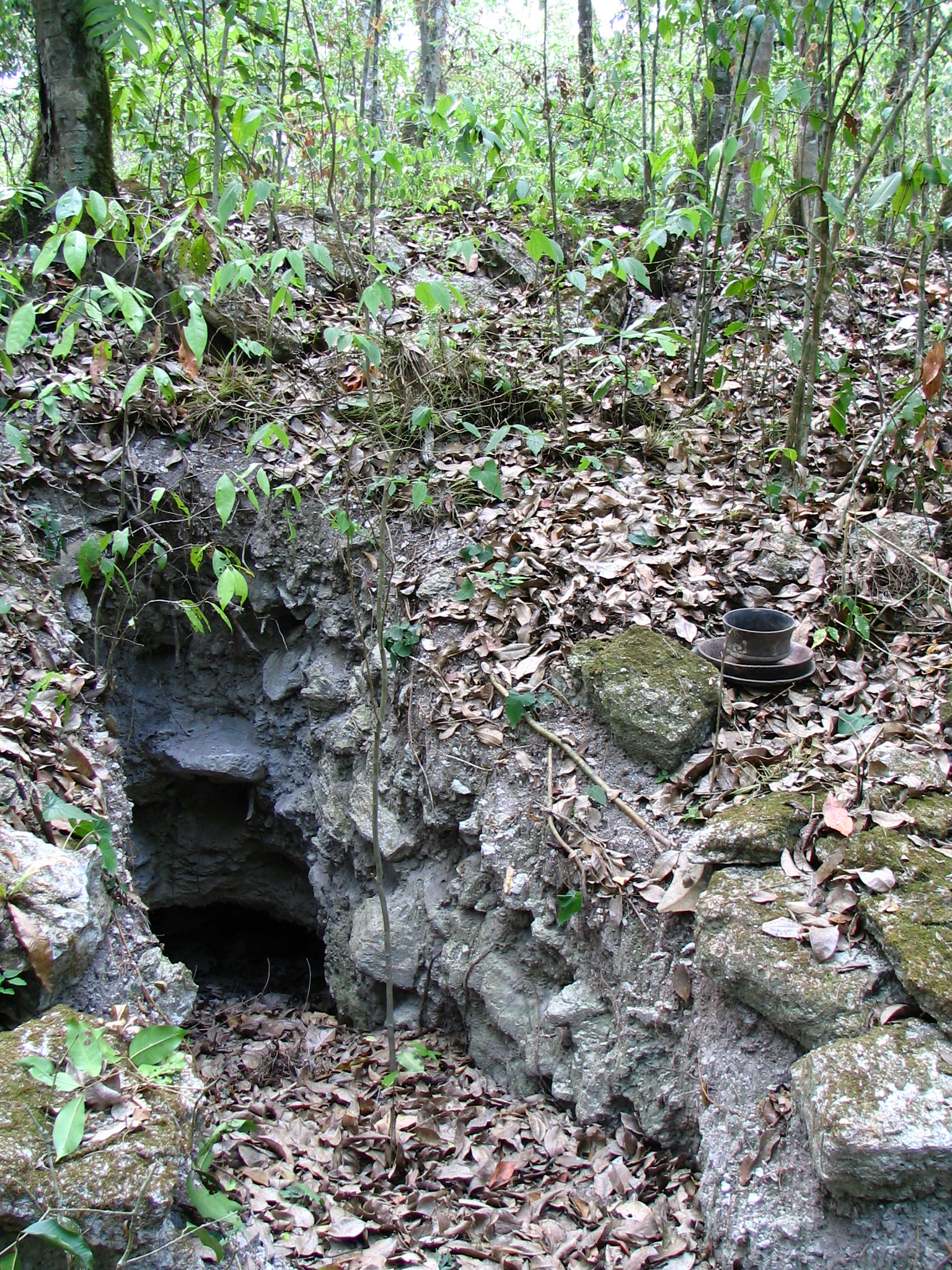
Looter’s trench with rejected/discarded vessels placed to the side, Naachtun, Guatemala. (M. Peuramaki-Brown, 2005)

Bowman Balestrieri, Blythe Alison. “Field Archaeologists as Eyewitnesses to Site Looting.” Arts, 7, no. 48 (2018): https://doi.org/10.3390/arts7030048

Summary

In this study, the author addresses the issue of archaeological site looting and the role of field archaeologists as eyewitnesses to such activities. The author is an Associate Professor of Criminal Justice at Virginia Commonwealth University, with a Ph.D. in criminal justice, a B.A. and M.A. in anthropology, and a B.A. in classics (with experience in classical archaeology). They ask why and how field archaeologists choose specific actions (internal or external)—or inactions—in response to witnessed looting activity? They also ask what responsibility, if any, belongs to field archaeologists in curbing looting activity? The author has couched the study within a criminological framework considered alongside archaeological ethics. The study is based on survey results of field archaeologists from around the world regarding their personal encounters with archaeological looting. Results included field archaeologists’ confessed actions or inactions and justifications for each. The author ends the article with a consideration of the culpability of archaeologists in witnessing (either directly or indirectly) looting activities.

Possible Discussion Questions:

  1. What have been your experiences with looting and looters? How have you acted, and for what reasons? Can you relate to any of the survey responses presented in the article? Has your approach to the subject changed over time?
  2. Terminologies: Is the dichotomy of “source” and “demand” countries a false one? Is the distinction between “art theft” and “looted antiquity” legitimate, given that many “identifiable object[s] owned by someone” were originally looted? What do you think of the term “subsistence digging” in relation to the author’s characterization of looting and archaeology as “appropriative practices”?
  3. How does the language of archaeology contribute to the problems of looting and the valuation of ancient belongings? For example, we love using the terms “first,” “earliest,” “oldest,” “unique” in public forums. What about our tendency to showcase items like jades and other “precious” materials?
  4. How does this statement by the author make you feel? “…[I]f archaeologists choose to distinguish illicit diggers who are ‘victims’ of exploitation from illicit diggers who are ‘criminals’ doing the exploitation, then by their own reasoning, archaeologists who encounter looting are now witnesses to both crime and victimization. In this sense, an archaeologist’s inaction now becomes a matter of both non-reporting of crimes and non-intervention with victims. To soapbox on the criminal culpability of traffickers and collectors, decry the criminal victimization of looters who dig out of desperation and abject poverty, and still choose not to report or intervene in looting is bystander apathy of the ugliest sort.”
  5. What other conflicts exist between archaeological ethics and archaeologists’ actions or inactions in the face of looting? (Link to SAA Principles of Archaeological Ethics: https://www.saa.org/career-practice/ethics-in-professional-archaeology )
  6. How can community-based archaeology work to dissuade looting? How can governments support such initiatives with this in mind?

SCRAP Reading Group, Week 32: Water, Agriculture, & Society

Last Thursday, we had our first meet-up of the new year. We had a good time catching up with each other, talking about future field research plans, and having a lot of laughs. Lorraine selected a new article for us to discuss, focused on the deep history of water management, agriculture, and society in the Calakmul Biosphere Reserve. Summary and associated discussion questions are below.

From https://www.ltandc.org/restoring-and-protecting-calakmul-biosphere-reserve/


Šprajca, Ivan, Dunning, Nicholas P., Štajdohara, Jasmina, Gómez, Quintin Hernández, López,
Chato Israel Marsetič, Aleš, Ball, Joseph W. G ngora, Sara Dzul, Olgu n, Octavio Q. Esparza,
Flores, Atasta Esquivel and Kokalja, Žiga. “Ancient Maya water management, agriculture, and
society in the area of Chactún, Campeche, Mexico.” Journal of Anthropological Archaeology.
Volume 61, March 2021, p. 1 – 21.

Summary:
In this article, the authors discuss the results of the Chactún Regional Project (CHRP). The CHPR
area is located in the Calakmul Biosphere Reserve, which is within the Elevated Interior Region
of the Maya Central Lowlands in the eastern part of the State of Campeche, Mexico. They direct
their focus on the three relatively newly discovered (2013 to 2014) and undisturbed urban centers
of Chactún, Tamchén, and Lagunita and to a lesser degree the surrounding spatial units. In their
evaluation of the area, they attempt to demonstrate the importance of using remote sensing
methods, such as their ALS (lidar) data obtained in 2016, in conjunction with field studies, to
validate their interpretations. The authors go into depth in the reconstruction of the area-specific
intensive agriculture and water management strategies and their coincidence with sociopolitical
and biosphere aspects not only within the study area, but also relationships with the Maya
worldview. Based on the earliest evidence of water sourcing and Pre-Mamom ceramics (~1000-
400 BCE), they surmised that Tamch n was one of the earliest Preclassic settlements in the
Central Lowlands and, as follows, in the CHRP area. This center fluoresced during the Middle
and Late Preclassic periods until Chactún and Lagunita seemingly overtook, thus perpetuating
the demise of Tamchén. Using demographic attributes, the authors put forth that it was most
likely during the Last Classic – probably around 750 CE – that the population reached a
maximum of ~ 15,000 in the CHRP area. These authors argue that it was the extensive
landscape modifications and environmental stressors, such as prolonged droughts of the 9th and
early 10th centuries of the Late Classic, that saw critical soil and wood depletion that in turn
contributed to sociopolitical and ideological instability. This ultimately resulted in the near
abandonment of the study area and led to the Classic Maya culture’s final demise in the Central
Lowlands.

Questions:
(1) How would you define the “final demise of Classic Maya culture” that is said to have spanned
from about CE 750 to 950 CE? Is your definition in line with the authors’ premise of what
occurred in the CHRP area? Would the concept of “transformative relocation” and/or “path
dependency” be more in keeping with what not only happened at the CHRP study area but
elsewhere in the Maya world(view)?

(2) How do the following water management systems fit with the relative locations of Tamchén,
Chactún, and Lagunita and their respective landscape modifications?
(a) top-down, autocratic system–>elite control
(b) top-down, collective system–>bureaucratic control
(c) bottom-up, autocratic system–>household control
(d) bottom-up, collective system–>local control
(e) all of the above
(d) none of the above

(3) Is it plausible that a major factor of the shift to Chactún and Lagunita could be attributed to
the collapse of the seasonal karst system at Tamchén (i.e. they simply could not meet the water
needs of the growing demographics)? Were the gods angry!?!

(4) Given the various assumptions, are the demographics feasible? How might there be more
concise parameters employed to mitigate errors?

(5) Do Chactún, Tamchén, and Lagunita, in fact, fit into what would be considered “urban
centers”?

SCRAP graduate students awarded SSHRC prizes

Congratulations to SCRAP team members Dave Blaine and Matt Longstaffe! They were awarded a Social Sciences and Humanities Research Council of Canada Masters Scholarship and Doctoral Fellowship, respectively, for their proposed research at the ancient town of Alabama in the Stann Creek District of Belize. Read on to learn a bit more about these two outstanding scholars.

Dave Blaine (M.A. Interdisciplinary Studies student, Athabasca University, Alberta, Canada) – a photographer and mapmaker by trade – is living his dream. Exploring, discovering… and digging! Dave’s current studies focus on the interdisciplinary subjects of New Media and Social Heritage. But his genuine interest is in how narratives and storytelling can communicate science to various audiences, specifically, the science of archaeology. Check out this recent write-up about Dave in AU’s The Hub.

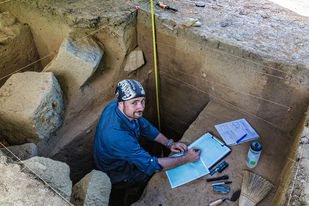
Dave drawing unit profiles.

Dave is developing a model for creating multimedia productions that tell stories of archaeology and archaeologists in innovative ways using digital technologies. The model requires him to tell the story of the Stann Creek Regional Archaeology Project (SCRAP) while actively participating in it. He’s had two field seasons in 2018 and 2019. During that time, he figured out what it looks like to juggle taking photos, shooting videos, recording interviews, and drawing maps with the day-to-day tasks of the project. 

And rest assured, the project is not just “the dig.” Along with the story of archaeological investigation, there’s also local politics, cuisine, and music. It’s a fulsome cultural experience. And it makes for a demanding production schedule.

Archaeology is a rich discipline for storytelling, and it provides a ready-made platform for exciting contemporary tales of travel, adventure, and (re)discovery as a field science. But archaeologists also reconstruct narratives of our pasts that can provide valuable and unexpected insights to address the challenges of our present and future. SCRAP’s research focuses on the ancient town site of Alabama as a possible example of a “boomtown” that developed in a sparsely populated area into a significant frontier center over a relatively short period. Communities around the world, past and present, have grown up under similar circumstances, and they rose to prominence for various reasons and then eventually faced sustainability challenges.

Matt Longstaffe (Ph.D. Archaeology candidate, University of Calgary, Alberta, Canada) is intrigued by the impact of economic activities on how such communities develop. His dissertation will explore household and group identities at Alabama and their relationships to community institutions. This includes elements of resource and labour distribution, skillsets, and specialist activities and how each contributed to the broader economy of the boomtown. In reconstructing and sharing this story, Matt will provide relevant insights, both locally and more broadly, into the social impacts of resource exploitation and development. This is particularly relevant in the Stann Creek District, where modern industrial development and associated settlement booms have occurred for over a century.

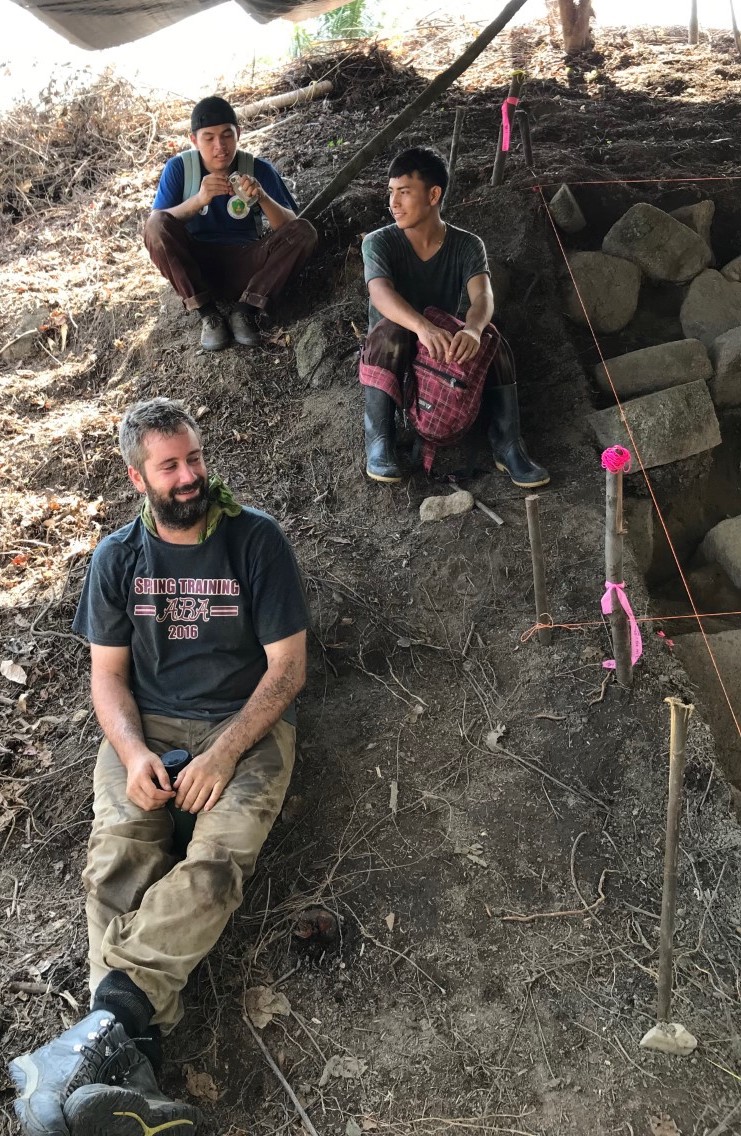
Matt hanging out with Higinio and Aaron.

Many people think of archaeology as a mind-numbing ordeal of brushing away dirt from bones and bits of pottery, or whatever it is that Indiana Jones does. Through storytelling, Matt and Dave hope to change those perspectives. Their stories will give our audiences insights into how archaeologists actually learn about past societies and gather evidence and use that information to understand how various peoples lived in the past. They will also relate what it is like to live, work, and collaborate with contemporary communities and build a culture of discovery in which these narratives are shared in meaningful ways.

By turning our gaze to earlier cultures and societies with similar experiences and sharing our own experiences in engaging and personal ways, SCRAP’s team is making significant contributions not just to archaeology as a discipline but to society as a whole. Exploring the past to inform a wiser future