Week 1: Setting Up, Digging Out, and Preliminary Adventures in the Foothills of the Maya Mountains

This week was our first full week in the field (Alabama site) and we hit the ground running… well, running with sweat, at least. After picking up Jill, Niki, and Frank on Sunday and getting settled into our “field camp” in Stann Creek District, Belize—we unpacked our lab and prepped for our first day of field work. At day’s end, we travelled to nearby Hopkins for an evening of pizza and fun.

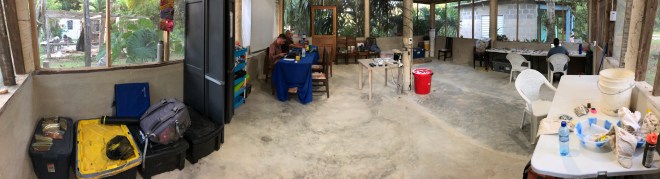
IMG_1731

Our newly screened-in lab

On Monday, after a late breakfast, we met with our Belizean collaborators—happily greeting friends from past seasons and meeting a couple of new individuals—, inspected the areas that we’d be focussing our efforts on this season, and went over the general plans.

61614129_2337362106549121_690598262654107648_n

Discussing and debating plans for 2019 season

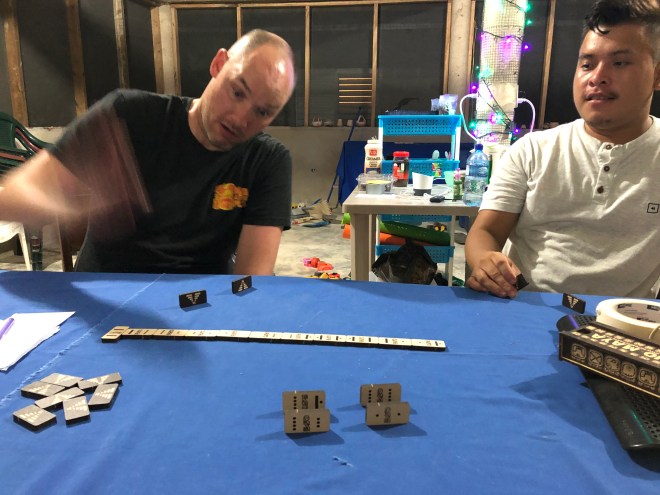
The folks from the village near the site had gotten an early start to avoid the heat of the day while clearing our excavation areas, so we called it quits early. That night, Meaghan schooled Shawn and Frank at dominoes.

IMG_1577

Shawn pretending he’s better at dominoes than Meaghan

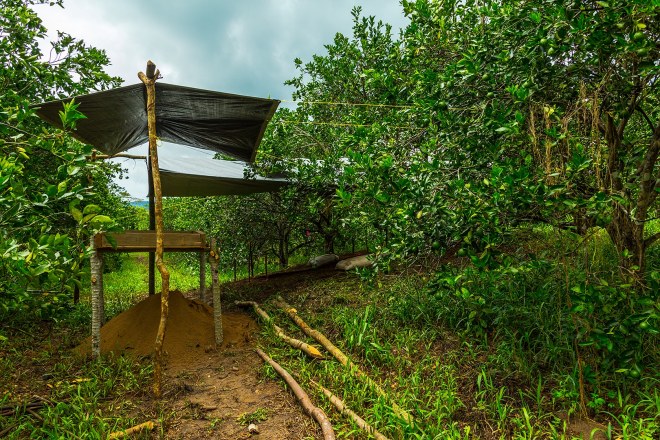
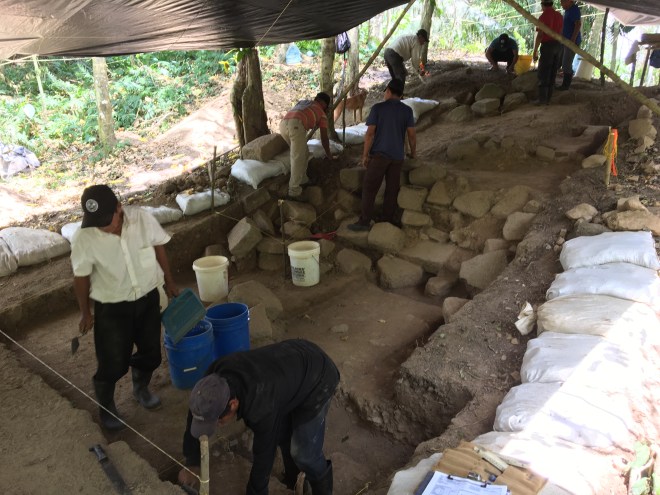
On Tuesday, we departed Maya Centre at our regularly scheduled time of 6 am and breakfasted in Maya Mopan. The guys set up an extensive tarp palace (rain shelter) in the monumental core and we re-established the boundaries of the 2018 excavations at Alabama Structure 1&2 (we’ll be continuing in this locale this season).

IMG_0712

Excavations at Tarp Palace (a.k.a. Structures 1 & 2)

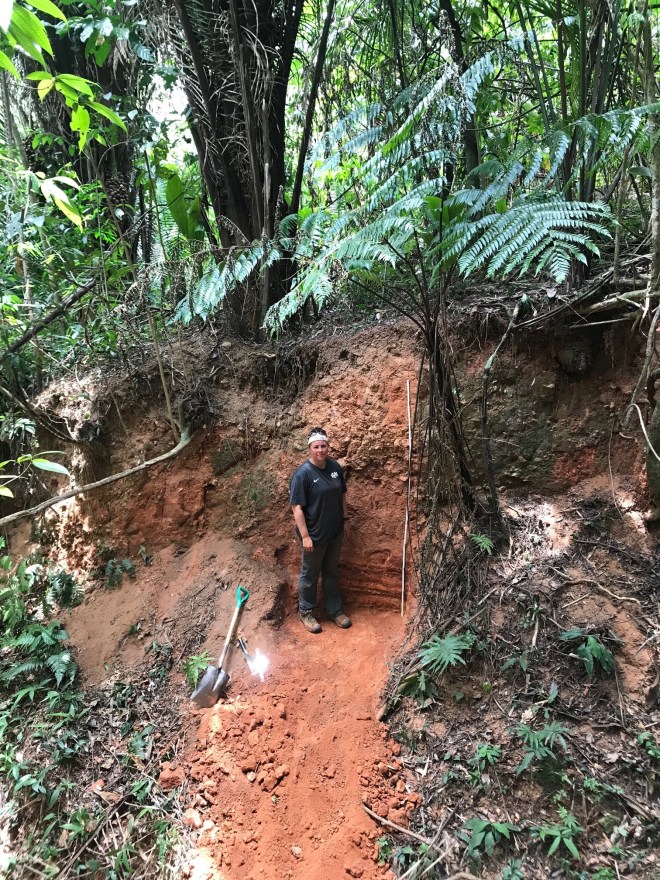
Meanwhile, a couple of kilometres to the southwest, a small crew began prepping for excavation of a mysterious granite feature first recorded in 2015 when Mr. Chiac Sr. (our Foreman) showed it to Meaghan, wondering what it might be. Originally interpreted as a staging area for the extraction of granite from the neighbouring streambed, the team was interested in ascertaining whether the feature was truly cultural, and to when it may have dated.  Was it related in any way to ancient community efforts at granite extraction for architectural blocks or other artifacts? Our ace Lab Director, Jill, strutted her stuff in the field, exploring the wild world of sand and clay in the Waha Leaf Creek valley. Hopkins beckoned yet again, along with our friend from Cayo (grown-up grandkids in tow), Mr. Landy.

60999759_10104408261141196_7929672306127798272_o

Jill digs sand.

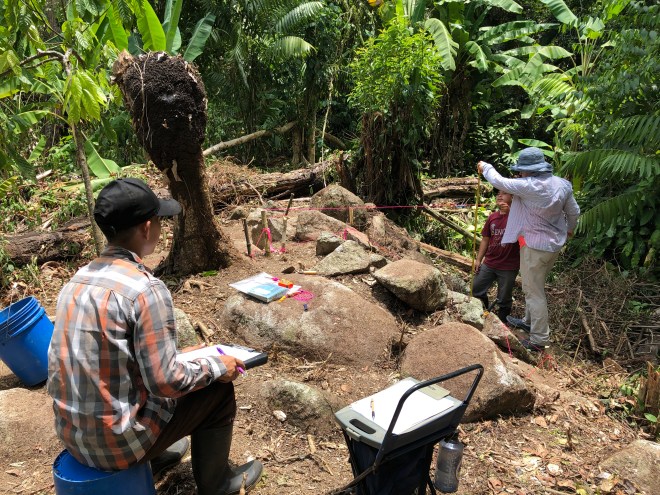
On Wednesday, we cleared the backfill out of the 2018 Op 6 excavations at Structure 1&2, where we will be revisiting some cool architectural finds uncovered at the end of last season. We also started excavating our granite feature, finding only a single potsherd within (thanks, Niki)! This, along with a stone axe uncovered by Higinio the following day, confirmed the feature was cultural, and we currently believe this to be the intentional shoring up of a natural terrace area, perhaps to prevent erosion for agricultural purposes (currently being used for growing jipijapa and bamboo with cacao and banana lower down, the steward of which was also curious as to original purpose of the feature). In present day, agricultural terracing is not a common technique used in Stann Creek, and its use in the pre-Columbian past of the region had only been hypothesized by archaeologists in the 80s and 90s. Future carbon dating will hopefully confirm the pre-Columbian designation, and we are now looking for a graduate student to do future terrace studies (hint hint), with a particular focus on understanding the extent of its use during the period of Alabama’s “boom.” The evening brought further excitement. As the water was out, we elected to drag our sweaty selves to Hopkins for a well-deserved dip in the Caribbean.  Nothing like an all-natural seaweed scrub and salt on the bug bites to put you in a positive frame of mind!

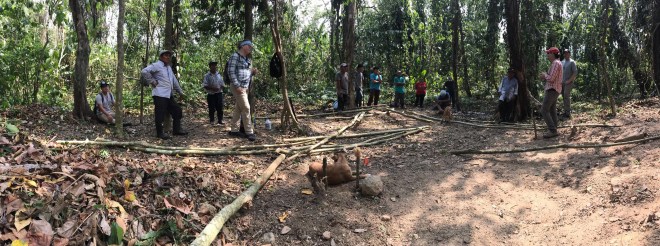
IMG_1624

Excavations at granite feature (Higinio, Niki, Frank)

On Thursday, we began excavation in earnest at Structure 1&2, following up on leads suggested in 2018. Two questions dictate our efforts here: First, what is the temporal span of construction represented at the locale? Tantalizing evidence for an earlier structure running perpendicular to the principal mass of Structure 1&2 was identified at the end of the 2018 season, and a conspicuous pile of granite slightly above the final plaza level may suggest post-Classic, post-abandonment, reuse/visitation. Second, how were earthen-core, granite-faced structures actually built and how have the taphonomic processes of a millennium transformed them?  Excavations continued at the granite feature in the foothills and our Lab Director took control back in camp. At the end of the day, we returned home to find water still in absence. This time, a quick trip to the Sittee River at Kendal cooled us and cleansed us. For dinner… All we can say is black dinner for the main and stewed pumpkin with 3lbs of sugar for dessert… sigh…amazing…

IMG_0717

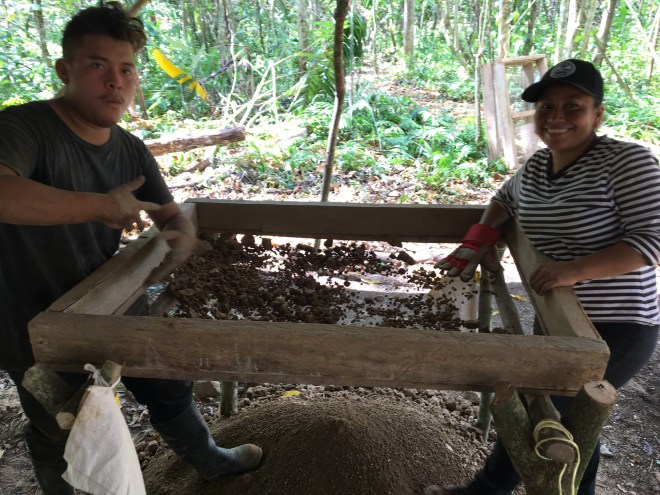
Frank and Virginia screening Tarp Palace matrix

Friday. Oh, Friday. How we love you. Meaghan completed her excavations in the foothills (mapped, profiled, 3D modeled, and backfilled), and Shawn completed a second full day of excavations at Structure 1&2. We ended the day with celebratory Ideals (basically Mr. Freezes) and headed back to camp where we enjoyed a delicious supper and the best dessert ever concocted by human or god: a banana pineapple fritter with chocolate sauce (thank you, Rigo)!

IMG_1596

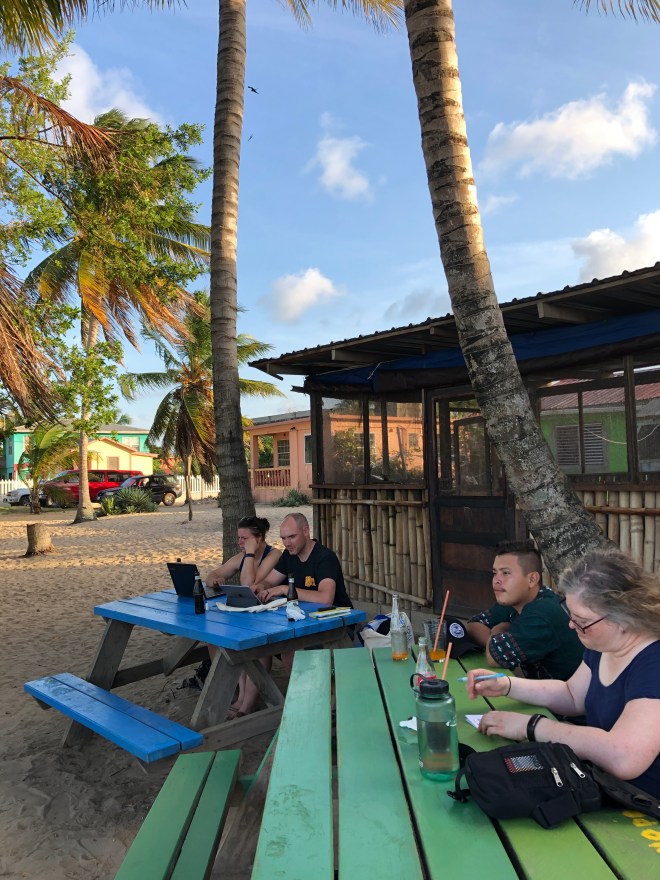
Working and relaxing in Hopkins.

Weekend was free for crew to catch up on work, relax, or whatever. On Saturday, we hung out in lab all morning doing work, until we picked up Dave at the airport. We then took him to a “Welcome Back to Belize” evening in Hopkins, hanging out at Ella’s Cool Spot.

That’s all for now. We’ll cover Sunday to Saturday of Week 2 next time. Stay tuned!

The SCRAP Team

Prep Week: You Can’t Can This Type Of Heat

There is no more important point of a field project (except, perhaps, the actual digging, lab work, and reporting) than the beginning. We arrived in Belize late on a sweltering Saturday afternoon, after repeated delays and way too much airport coffee. Temperatures in Belize have been soaring at over 100 F, a sharp contrast to the still snowy conditions where we had just been (Calgary and Flagstaff).

IMG_1507

Arriving in Belize to +100F weather

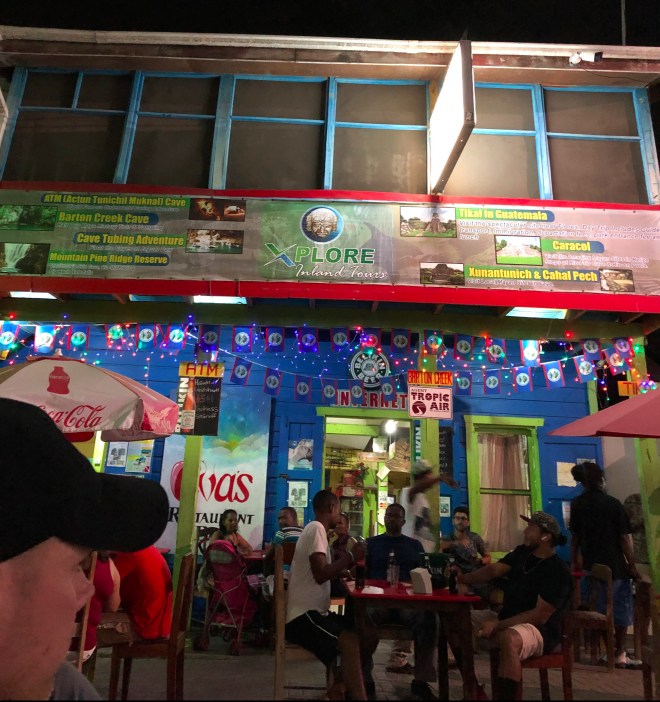
It has become our habit to arrive in Belize at least one week before fieldwork is set to commence, in order to take care of all the minutia—purchasing supplies, printing paperwork, renting vehicles, and picking up our permit (you may have seen an earlier post involving a “happy dance”). When things go smoothly, this leaves us with ample time to take care of other essentials to a successful field season—socializing, reconnecting with friends and family, taking in the sights, and acclimatizing. While things rarely go as smoothly as is ideal for the former, we always have ample time for the latter, and this year was no exception. Thank you to Ms. Erva and Mr. Landy, Nigel, Yvette, Karim, and all the rest of the Espat clan, to Raf Guerra, Kay Loague, and everyone else that we had the pleasure to reconnect with this week. We’ll see you at the Belize Archaeology Symposium in 5 weeks’ time!

IMG_1510

Hanging out on Burns Avenue in San Ignacio, Cayo

IMG_1557

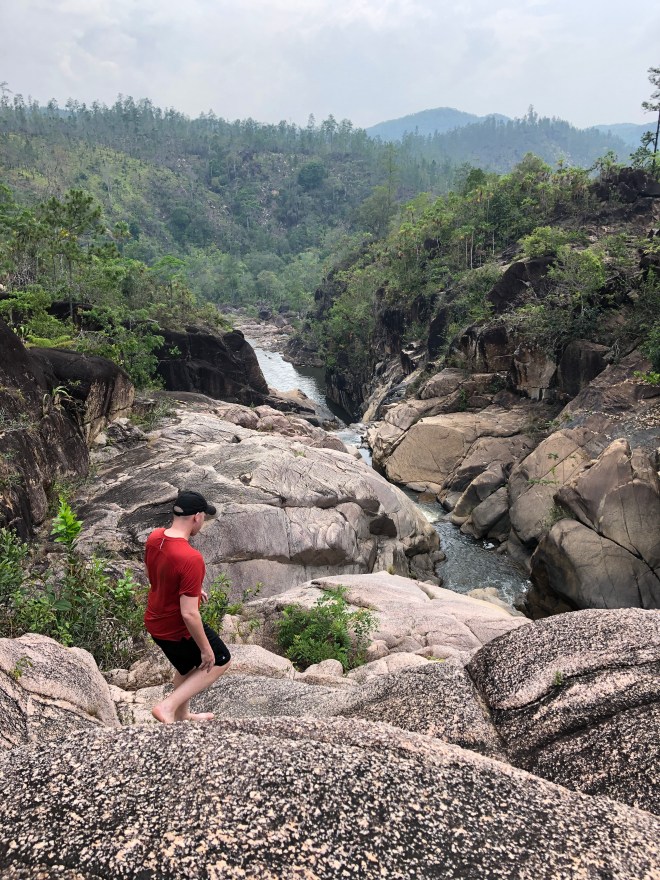
Cooling off at the lovely Rio On Pools in the Pine Ridge

We met our other project members, Jill, Niki, and Frank (more members to follow next week), and headed out for Stann Creek District on Sunday, spending the day setting up our lab and going through items left in storage. We are ready and raring to go for our first week of the season!

Next week’s blog will introduce the goals of this season and outline our first week’s progress.

Best,
Meaghan, Shawn, and the SCRAP team.

SCRAP & International Women’s Day 2019

In celebration of International Women’s Day 2019, we’d like to recognize (via photo collage) the amazing women who have supported—through a variety of ways—the Stann Creek Regional Archaeology Project. These women have explored, taught, studied, surveyed, excavated, analyzed, innovated, illustrated, written, presented, cooked, cleaned, toured, chauffeured, trailblazed, constructed, mentored, shared, organized, advocated, fundraised, cared, and so much more. SCRAP would not exist without you—Thank You! #scraparky #WomensDay #sisterhood #archaeology #bettabelizeit @unwomen

Women_SCRAP_collage

Congratulations & some press

Congratulations to SCRAP member, Megan Williams, who completed her BA Anthropology @athabascau this month and has now been accepted into the MA archaeology @ucalgary! Megan is finishing up work on obsidian sourcing at the Alabama site (to be submitted for publication later this year) and will go on to experience field work in Mexico this summer.

52999898_2124621271183769_1350966415175188480_o

Also, check out this recent press item in the Athabasca University Hub re: SCRAP and Dr. Peuramaki-Brown.


SCRAP outreach feedback

Do you follow our website, Facebook Page, Instagram feed, YouTube Channel, or Twitter feed? Let the SCRAP directors know why and what type of materials/posts you would like to see through these media in the coming year(s). Comment below or write to scrap.arky@gmail.com #archaeologyoutreach #scraparky #stanncreekdistrict #bettabelizeit
SCRAP Logo-colour

Goodbye, SCRAP 2018. Hello, SCRAP 2019!

The SCRAP team is ending 2018 and starting 2019 with a bang.

December Belize Trip

From Dec. 8-23, we (SCRAP Co-Directors, Dr. Meaghan Peuramaki-Brown and Dr. Shawn Morton) travelled to Belize for meetings and a short lab session.

During our first week, we visited the Institute of Archaeology to pick up the letter acknowledging our presence in the country to conduct lab work under our 2018 permit. We also had an encouraging and productive series of meetings with the director and various associate directors of the Institute about upcoming projects.

IMG_0431 copy

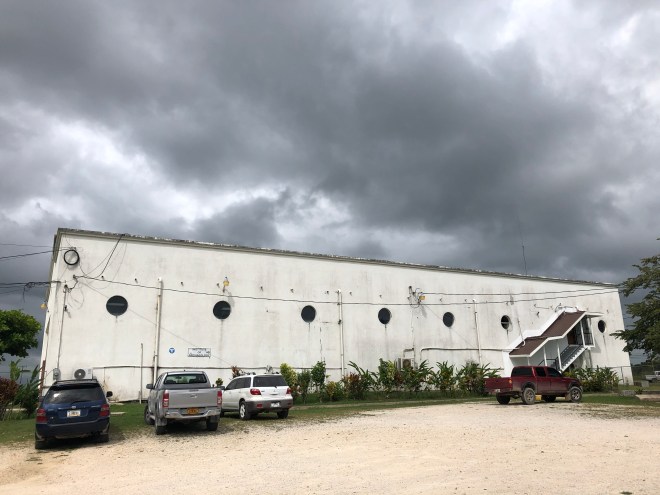
A stormy sky over the NICH/Institute of Archaeology in Belmopan. Luckily, it was sunny skies during our meetings 🙂

We visited with colleagues and friends in Maya Mopan village to keep them posted on project happenings, to consult regarding plans for our upcoming season, to keep up on village happenings, and to wish everyone happy holidays. The remainder of our first week was spent getting to better know the people and places of Hopkins—including our new favourite hangout, Ella’s Cool Spot.


During our second week, we moved to our field camp for a week of lab work—ongoing analysis of materials recovered during last summer’s excavations in the monumental core and settlement zone of Alabama. This work included

  • Analysis of pottery forms, pastes, and surface treatments/decoration to determine temporal designations and function.
  • Analysis of lithic debitage and tools to determine raw material type, manufacturing techniques, and overall functions, along with some possible temporal designations.
  • Closer analysis of small and/or special finds, including grinding stones, worked pottery sherds, fishing tools, projectiles and axes, etc.
  • Illustration of pottery rim profiles for the purpose of communicating vessel shape and for comparison with vessels from elsewhere.
  • Artifact photography for the purpose of communicating artifact appearance, comparisons, and for future illustration and 3D modelling purposes.
  • Archaeological testing and experimental studies to determine the actual material of our mysterious ‘amber’ pieces encountered during excavations in the settlement zone.


Exciting Times in 2019

2019 is shaping up to be an exciting and busy time for the SCRAP team. In May, we will begin the second season of our SSHRC Insight Grant field research, focused on the reasons behind the rather sudden appearance of more complex development at Alabama and how it was sustained; our field season will last from mid May to early August. Should all go as planned (which, you never know in archaeology), we will be involved in a lidar survey of the Pearce Ruins (10 km away from Alabama) in the spring, thanks to funding from various sources including a SSHRC Explore Grant (via Athabasca University). In March, we will also begin the consultation process for our new education/heritage-conservation Augmented Reality (AR) project, funded by a National Geographic Explore Grant. We’ll also complete our 2018 Final Report about our summer excavations in time for our March trip, and will be releasing a series of social media posts that explain the content of the report in a somewhat more entertaining fashion than is the norm for technical reports in archaeology.


From our team to you/yours, we wish you a very joyous New Year 2019 full of wondrous adventure!

Cheers,

The SCRAP Team

Congratulations Team SCRAP

Some great news for the SCRAP team.

Our Field Lab Director, Jill Jordan, was granted a Wenner Gren for her ongoing research into the development and transformation of social networks among potters relative to collapse and migration.

Additionally, our Project Directors, Dr. Meaghan Peuramaki-Brown and Dr. Shawn Morton, along with SCRAP GIS specialist Dave Blaine, were granted a SSHRC Explore Grant via Athabasca University for future LiDAR survey in the Stann Creek District.

Congratulations to Team SCRAP!

IMG_5454

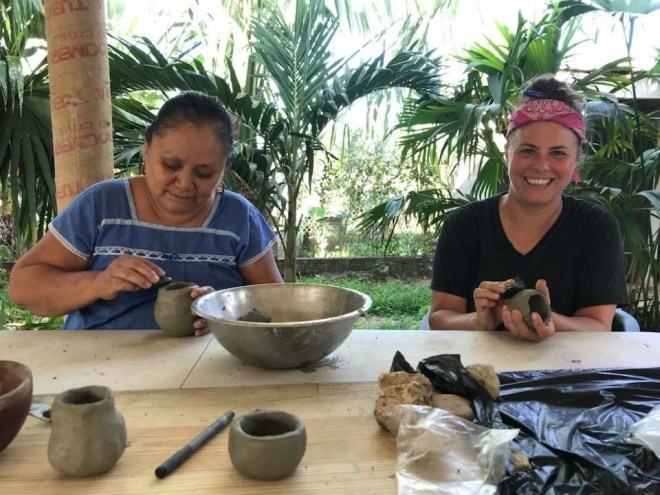
Jill and Ms Aurora making pots

SSHRC Insight Grant for Alabama

Happy to finally be able to formally announce our new 4-year grant for research at Alabama. Thank you to the Social Sciences and Humanities Research Council of 🇨🇦 (scroll wayyy down to Alberta to see our listing):

http://www.sshrc-crsh.gc.ca/results-resultats/recipients-recipiendaires/2017/insight_savoir-eng.aspx


IMGP0421

Canadian field school students and Belizean field assistants working hard on a residential mound at Alabama (SCRAP 2018)